Tennant Logo
Contact Tennant application planning

Share the facility conditions behind the machine request

A useful inquiry does not need to be polished. It should identify the floor-care work, the people involved, the constraints that shape the route, and the result that needs to be verified. The planning team can then separate immediate screening questions from facts that belong in a controlled site trial.

01

Application desk

Use the form for scrubber, sweeper, or industrial vacuum selection. Include floor type, soil, approximate route, narrow access, slopes or thresholds, traffic, shift window, water, disposal, charging, storage, and the current method.

[email protected]
02

Service planning

Describe the equipment context, observed fault, operating hours if available, maintenance history, recent consumable changes, and the conditions under which the issue occurs. Do not continue operation if safety or equipment instructions require the machine to be removed from service.

+1 800 555 0172
03

Trial preparation

Select a representative route with typical soil and access. Identify the responsible facility lead, operator, safety contact, and service contact. Define what the team will observe: pickup or removal, recovery, dryness, maneuvering, interruptions, operator steps, and rework.

Open Applications planning

What happens after submission

The inquiry is reviewed for missing site facts and obvious application boundaries. A follow-up may request a route map, photographs, floor or soil details, access measurements, utility information, or current-method notes. Early screening is not final approval. Machine suitability should be confirmed with current product documentation and, where practical, a representative trial.

Standard commercial cleaning equipment must not be assumed suitable for hazardous locations, combustible dust, regulated material, validated sanitation work, or any other specialized requirement. Those cases need explicit review and model-specific evidence.

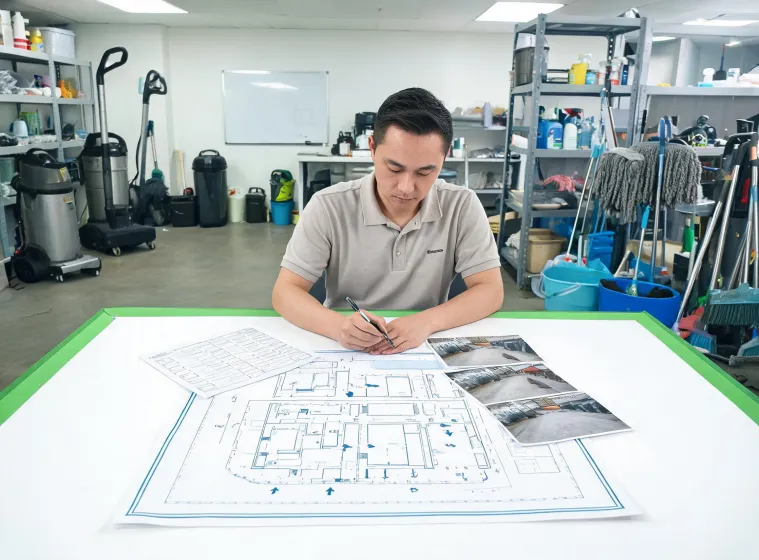
Application specialist reviewing facility route drawings
Site brief

Give the team a concrete place to begin

Include the difficult part of the route, not only the total floor area. State the current defect or burden, such as loose debris before washing, repeated wet passes, slow drying, missed edges, frequent refill, poor pickup, difficult dumping, operator fatigue, or service interruptions.

Avoid entering confidential, sensitive, health, payment, or safety-critical information into the general form. Use the follow-up channel designated by the responsible organization for protected records or formal approvals.

  • Machine family or current equipment
  • Facility and representative route
  • Surface and typical soil
  • Access, traffic, utilities, and storage
  • Acceptance and service expectations

By submitting, you acknowledge our Privacy Policy.